
“I want this painting to make my sofa look expensive.”
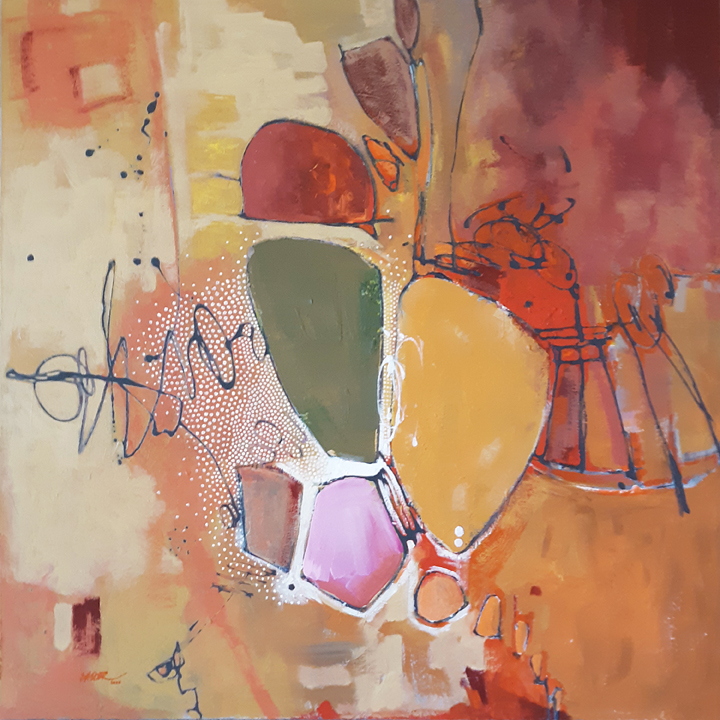
“1964” was the first piece created specifically for the “MOD!’ series. I enjoyed role playing as a practicing artist in New York during the mid 20th century. Really. I pretended I was there. I listened to Dave Brubeck’s “Take Five” to help get me in the proper mindset. Do I often use music to inspire my art? No, not often. Music has its own unique visceral embrace, its own set of rules. If the visual artist isn’t careful, it can splatter all over the canvas.
I did a lot of research and sought out work by the NY Abstract Expressionists. As impactful as these artists were, to be honest, there wasn’t a hell of a lot of consistency between them. If I could choose a word best to describe the work, it would be “BOLD”. After days of study I decided the three best artists of the group, the three that influenced the general tone of the movement (for me of course, I’m no art historian) were Hans Hofmann, Franz Kline, and Jackson Pollock. To me, their paintings epitomized and encapsulated where this group was trying to go. Their work is brazen, novel, and dares the viewer to take a chance on liking it.

Song of the Nightingale 
Butress 
Summertime: Number 9A
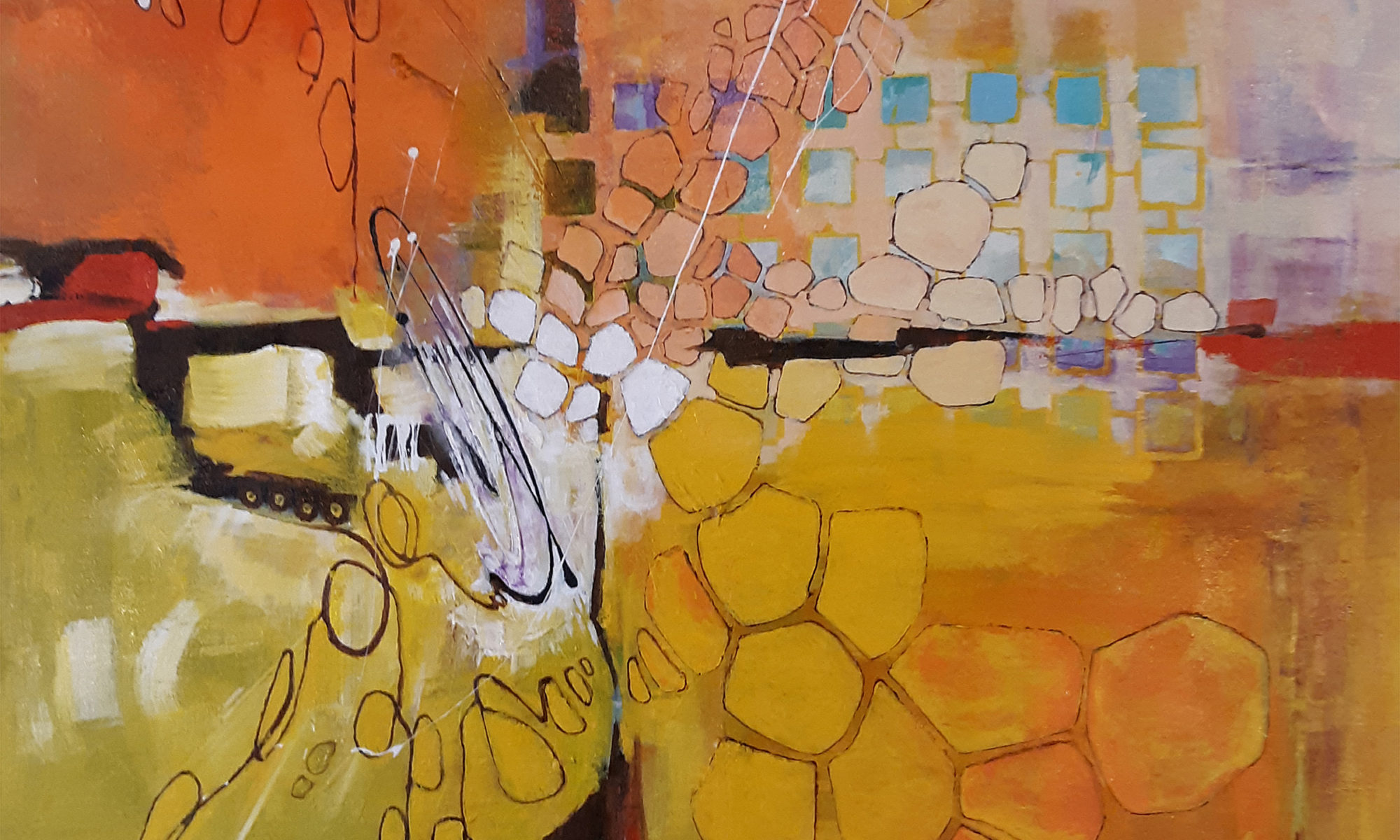
I definitely was not going to mimic the work of others in this series, but instead, I wanted to infuse my work with the flavors of each of these three. I let my color choices be steered by Hofmann. I would learn from Kline’s compositions, balanced designs unshackled from traditional still life or landscape models. Pollock’s freedom of line, his energetic explosions of scribbles and flicks that send the viewer’s eye wandering across the surface would help make my piece dance.
Dots. I needed dots. I have no idea why I thought my work needed dots, but it did. The array of tiny dots across the canvas in key locations bring specific areas of the composition to the forefront. This was also the first piece where I used this new ‘signature’ . Tedious to apply, certainly, painstaking even, but as a highlight, this new mark making technique would continue to be used in subsequent pieces.
So why 1964? I was four years old at the time. For some reason, this year feels like a turning point in society. It feels like it was a moment that marked an old guard being replaced by the new recruit. The day of the beatnik was at an end and would soon be replaced by a youthful and energetic wave, the next step in Modernity’s natural evolution.


